
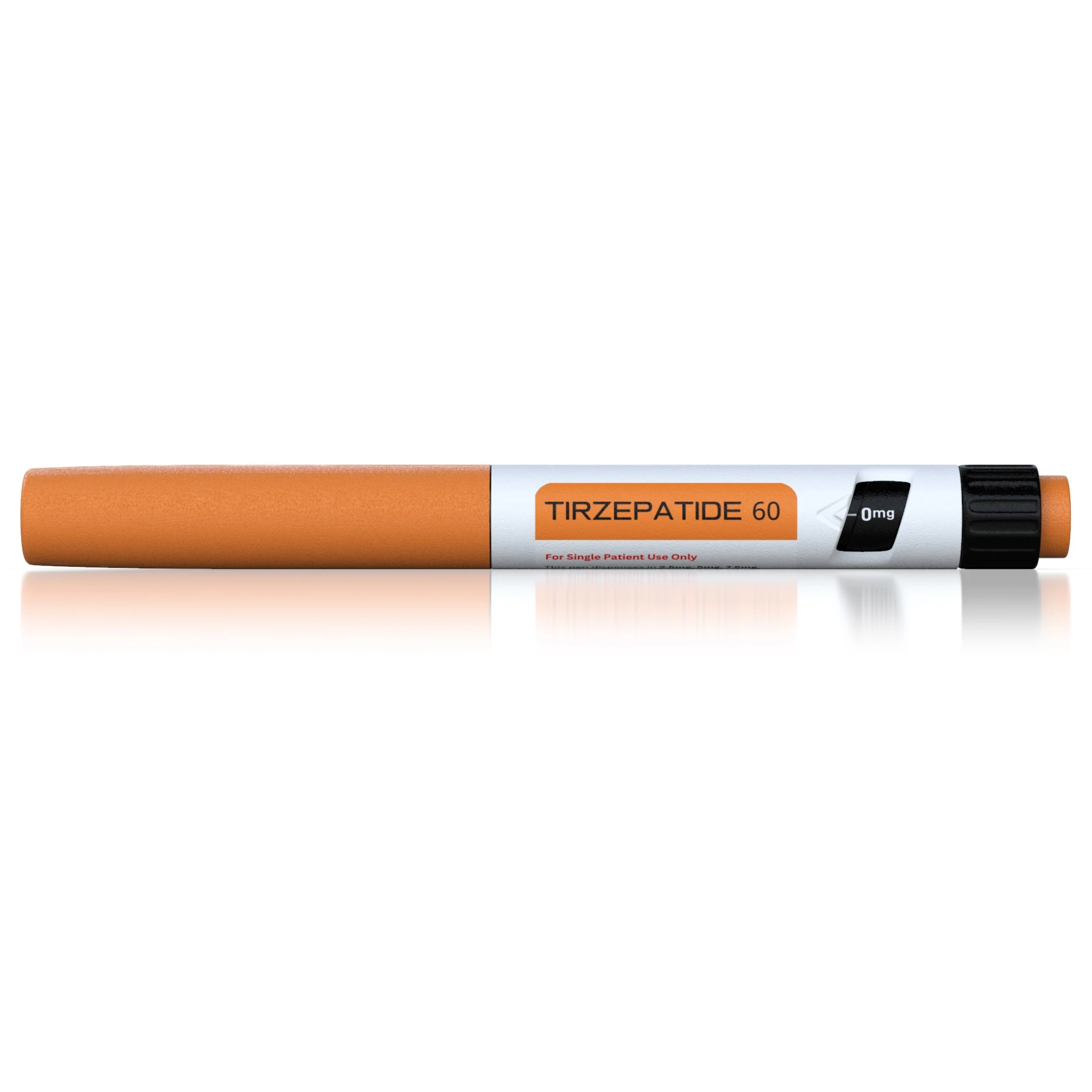
Research teams studying the dual GIP/GLP-1 agonist across appetite and glucose-metabolism pathways.
- 1 × pre-filled multi-dose pen
- Full instructions
- Tamper-evident verification seal
- 8 × sterile needles
Body Pharm Tirzepatide 60mg
Official Body Pharm store — genuine product, batch-tested
Multi-dose injection pen with 60 mg of tirzepatide. Dual GIP and GLP-1 receptor agonist for subcutaneous injection. Exclusively for research and analytical purposes.
- Lab-tested batch with full traceability
- Sealed pharmaceutical-grade packaging
- Discreet, insured shipping within Spain
Add 4 more pens and you get 10 % off. Any mix of pens counts.
Shipping to Spain only. If you are buying from another country, use the UK, German, Czech or EU edition — the links are at the end of this page.
Body Pharm's tirzepatide 60 mg pen is a multi-dose research pen with 60 mg of tirzepatide in total per device, which is equivalent to four doses of 15 mg or to twenty-four steps of 2.5 mg in a single sealed unit. The dose dial sets the dose directly in milligrams. It is supplied exclusively for laboratory and analytical purposes, not for use in people, and it is shipped within Spain with certificates of analysis that are specific to each batch.
The 60 mg content is decisive because it reproduces the full SURPASS-style escalation arc (2.5 mg, 5 mg, 7.5 mg, 10 mg, 12.5 mg, 15 mg) within a single traceable batch, with each step set directly on the dial. That removes the variance between units that can distort studies of dual binding at the GIP (glucose-dependent insulinotropic polypeptide) and GLP-1 (glucagon-like peptide-1) receptors. Consolidating it into a single device also reduces the number of pen changes over the course of a full titration study and, with them, the batch-number variables that have to be reconciled in the dose records. As a medicine, tirzepatide is subject to medical prescription [1]; that is why this offering is directed exclusively at research accounts that have been verified.
Tirzepatide 60 pen: the essentials
- The 60 mg pen brings a complete escalation sequence of 2.5–15 mg together in a single device and avoids pen changes halfway through the protocol, along with the batch-number variables that come with them.
- The dual agonism of tirzepatide at the GIP and GLP-1 receptors sets it apart from GLP-1-only peptides and is the basis for comparative research on the incretin pathways.
- Every pen is traceable by batch and is delivered with a certificate of analysis covering identity, purity and mass; research staff can request the chromatograms by quoting the batch number.
- The dose dial sets the dose directly in milligrams, so that the dose delivered is fixed by the mechanism of the device and not by the technique of the operator.
- The reference schedule is 2.5 mg once a week, with increments of 2.5 mg every four weeks, up to a maximum of 15 mg per week.
- It is a product exclusively for research, not authorised for human use and distinct from the prescription medicine Mounjaro.
What is the tirzepatide 60 mg pen?
The tirzepatide 60 mg pen is a research-grade multi-dose pen holding 60 mg of synthetic tirzepatide in total, a dual agonist at the GIP and GLP-1 receptors. It is supplied in a sealed and pre-filled 3 ml cartridge for administration by the subcutaneous route, with the dose set on the dial in milligrams, and it is intended exclusively for laboratory and analytical purposes, not as an authorised medicine.
Tirzepatide acts simultaneously on two incretin receptors: the receptor for glucose-dependent insulinotropic polypeptide (GIP) and the receptor for glucagon-like peptide-1 (GLP-1). This dual receptor profile distinguishes it from earlier mono-agonists such as semaglutide and formed the mechanistic basis of the SURPASS phase III programme (2021–2023). The molecule corresponds to the active-ingredient sequence that Eli Lilly markets under the brand name Mounjaro, which is authorised in the EU for type 2 diabetes in adults [1]. Body Pharm's 60 mg pen is a research format of that molecule. It is not Mounjaro, it is not authorised and it is not intended for human use.
Format details
The pen is a device with a sealed 3 ml multi-dose cartridge. Each step of the titration is set on the dial, in milligrams, and the device delivers that dose. That removes a common source of variance from titration series. The 60 mg covers a complete escalation arc in steps of 2.5 mg [2]. Anyone who is translating that arc into laboratory protocols will find the details in our tirzepatide dosing and titration protocol guide. For the mechanistic comparison with GLP-1-only peptides and with the triple agonists, consult the retatrutide vs semaglutide vs tirzepatide comparison.
Dual GIP and GLP-1 mechanism: why it counts in research
Tirzepatide activates the GIP and GLP-1 receptors with a single acylated sequence of 39 amino acids, which is what allows weekly dosing. Compared with semaglutide, which acts on GLP-1 alone, the GIP arm was associated in the comparative trials with greater weight loss and with a higher ceiling of gastrointestinal tolerability at equivalent doses [3]. The mechanism in detail, the SURMOUNT and SURPASS trials and the comparison with retatrutide are in what is tirzepatide.
60 mg pen: dose arithmetic for research protocols
A tirzepatide cartridge of 60 mg gives 12 doses of 5 mg, 8 of 7.5 mg, 6 of 10 mg or 4 of 15 mg. That corresponds cleanly to the SURPASS-style escalation in steps of 2.5 mg over the course of a research plan with intervals of 4 weeks. The same cartridge offers 24 doses at the initial 2.5 mg step that was used in SURPASS-1 to SURPASS-6 (2021–2023), where the dose was increased by 2.5 mg every four weeks up to a maximum of 15 mg weekly [1]. This arithmetic serves solely for the planning of research protocols.
The arithmetic in detail
If you divide 60 mg, as the total mass that can be delivered, by the chosen dose size, you get the number of doses. At 12.5 mg per dose, the cartridge gives 4 doses plus a remainder of 10 mg; at 5 mg, it gives 12 clean doses with nothing left over. Anyone who runs through a complete SURPASS-2 ladder (2.5 → 5 → 7.5 → 10 → 12.5 → 15 mg, one dose of each) consumes 52.5 mg from a single 60 mg pen and keeps 7.5 mg in reserve for a confirmatory replicate at the low end. The summary of product characteristics for Mounjaro confirms the same rule of 2.5 mg steps and intervals of ≥ 4 weeks on which this arithmetic rests [1].
Why the dial narrows the dose confidence interval
Each step of the ladder is set on the dial, in milligrams, and is delivered by the mechanism of the device. In dose-response studies in which the dependent variable responds to the mass that is actually delivered rather than to the nominal mass, that narrows the confidence interval on the x-axis before a single pharmacodynamic measurement has even been recorded: the dose is a property of the device and not of the technique of the operator, and the same mark delivers the same mass in week one and in week twenty.
The full logic of the escalation and the justification for the spacing between events are in the tirzepatide dosing and titration protocol.
Quality, provenance and batch traceability
Every Body Pharm tirzepatide 60 mg pen is filled, sealed and dose-validated before dispatch, in line with laboratory standards that are aligned with the EU GMP (good manufacturing practice). A unique batch number is assigned during filling and is linked to the corresponding certificate of analysis. The CoA (certificate of analysis) is the primary document of provenance. It documents the identity of the peptide, the mass per cartridge, the purity value by RP-HPLC (reversed-phase high-performance liquid chromatography) and the date of the analysis. Procurement officers can link the pen that they have in front of them to the exact analytical run that released the batch.
What batch traceability covers in practice
The batch number printed on each pen refers back to four archived data sets: the synthesis lot, the fill-and-closure run, the HPLC purity chromatogram and the confirmation of identity by mass spectrometry. Purity is assayed by reversed-phase HPLC with UV detection. Identity is confirmed by LC-MS (liquid chromatography coupled to mass spectrometry) against the expected monoisotopic mass of the tirzepatide sequence. Research teams can request the CoA and the associated chromatograms before or after the purchase, by quoting the batch number to our quality control mailbox. That supports checks on receipt in line with the QMS (quality management system) procedures of most universities and contract laboratories.
Regulatory framing for research peptides
Research-grade tirzepatide for laboratory use is not an authorised medicine and it sits outside the prescription supply chain that applies to products such as Mounjaro [1]. This distinction is important for procurement. The documentary chain is analytical rather than pharmaceutical: the standard of proof is the CoA and the batch records, not an authorisation. The material is not intended for use in people. Anyone who is comparing molecules at the procurement stage will find help in the retatrutide vs semaglutide vs tirzepatide comparison for justifying the selection criteria in a study protocol.
Tirzepatide 60 versus other research formats
The 60 mg multi-dose pen is better suited to long titration work than pens of lower capacity, because it brings a complete escalation sequence together in a single device. A single 60 mg cartridge covers a weekly progression of 2.5 → 5 → 7.5 → 10 → 12.5 → 15 mg without a pen change halfway through the protocol, and in doing so it removes one of the most common sources of discrepancy in the dose records of studies with repeated dosing. A 10 mg or 20 mg pen, by contrast, forces between two and six changes of device over the same schedule. Each change adds a new batch variable that then has to be reconciled against the CoA.
With everything in a single sealed cartridge, the dose is set on the dial and the primary container is not reopened between administrations. This is relevant for anyone who runs analytical replicates in parallel, in which the consistency of the vehicle is a controlled variable. On the subject of storage: the pen is kept at between 2 and 8 °C and protected from light, keeps for 24 months unopened and for 12 months from the first puncture, tolerates up to 30 days at room temperature with a maximum of 30 °C if no refrigerator is available, is brought to room temperature before injecting and is never frozen.
Anyone who is translating the 60 mg in the cartridge into a specific weekly plan will find the detailed dose arithmetic in the guide on the tirzepatide dosing and titration protocol. The comparable pen formats on the same platform are documented on the Retatrutide 32 and Retatrutide 64 pages.
Shipping, packaging and returns
Shipping is by standard delivery for a flat shipping charge to addresses within Spain, with tracking and in neutral, unprinted outer packaging, with no indication from the sender as to the contents. The expected delivery time is 3–5 working days from dispatch. The order confirmation and the tracking number are sent by email as soon as the shipment has been registered in the network.
Anyone working with workflows that are sensitive to the cold chain should take the transit time into account when planning the receipt and the checking of the goods. Store the pen at between 2 and 8 °C and keep it protected from light: while unopened it keeps for 24 months and, once it has been punctured for the first time, it is to be used within 12 months. If you do not have a refrigerator available, the pen will tolerate up to 30 days at room temperature, with a maximum of 30 °C. Let it come to room temperature before injecting and never freeze it.
Returns of unused and unopened goods are accepted within 14 days of receipt, provided that the original seal is intact and the identification of the batch is legible against the CoA. Pens that have been opened or used cannot be returned, because the sterile barrier and the chain of custody cannot be verified again once the pen has been taken out of controlled storage. Before opening the goods, anyone who is going to match the content of the cartridge to a planned escalation should have the guide on the tirzepatide dosing and titration protocol to hand as a working reference.
Research use only: regulatory framing
Body Pharm's tirzepatide 60 mg pen is sold exclusively for research and analytical purposes and is not intended for human consumption. It is delivered with research labelling for in vitro and analytical work, and it may not be administered either to people or to animals.
Buyers are responsible for ensuring that their use complies with institutional ethical approvals, risk assessments and all of the sector requirements that apply to their institution.
The authorised medicine containing tirzepatide is Mounjaro (Eli Lilly), a prescription drug for the treatment of type 2 diabetes [1]. Body Pharm's 60 mg pen is a separate product that is exclusively for research, and it cannot be equated with Mounjaro or used as a substitute for a prescribed medicine. Anyone who is comparing molecular options within the incretin class can draw on the retatrutide vs semaglutide vs tirzepatide comparison for the receptor-binding context before settling on a procurement position.
Next steps
Make sure that you have institutional ethical approval and a risk assessment in place before you place an order. Then turn to the tirzepatide dosing and titration protocol to translate your escalation plan onto the 60 mg cartridge, and then request a quote, providing the details of your verified research account.
More peptide research resources
- Tirzepatide dosing and titration protocol: translates the 60 mg in the pen into a research ladder running from 2.5 mg to 15 mg that is set on the dial.
- Retatrutide vs semaglutide vs tirzepatide comparison: sets dual GIP/GLP-1 specificity against GLP-1 mono-agonism and against the receptor profiles of the triple agonists for the selection of a molecule.
- Semaglutide dosing protocol: the reference plan for GLP-1 mono-agonist comparator arms in incretin studies.
- Retatrutide dosing protocol: the titration reference for triple agonists when the focus is on coverage of the GIP/GLP-1/glucagon receptors.
- Weight-loss peptide category: the complete Body Pharm research catalogue of incretin and metabolic peptides.
Sources
- EMA, EPAR and summary of product characteristics (SmPC) for Mounjaro (tirzepatide): escalation in 2.5 mg steps with intervals of at least 4 weeks, injection sites and storage. ema.europa.eu
- Jastreboff AM, et al. Tirzepatide Once Weekly for the Treatment of Obesity (SURMOUNT-1). N Engl J Med. 2022. pubmed.ncbi.nlm.nih.gov/35658024
- Frías JP, et al. Tirzepatide versus Semaglutide Once Weekly in Patients with Type 2 Diabetes (SURPASS-2). N Engl J Med. 2021. pubmed.ncbi.nlm.nih.gov/34170647
Buying from the UK? See the Tirzepatide 60 pen on the UK store, which ships within the UK.
Buying from Germany? See the Tirzepatide 60 pen on the German store, which ships within Germany and Austria.
Buying from Czechia? See the Tirzepatide 60 pen on the Czech store, which ships within Czechia.
Buying from another EU country? See the Tirzepatide 60 pen on the European store, which ships across the EU.


