
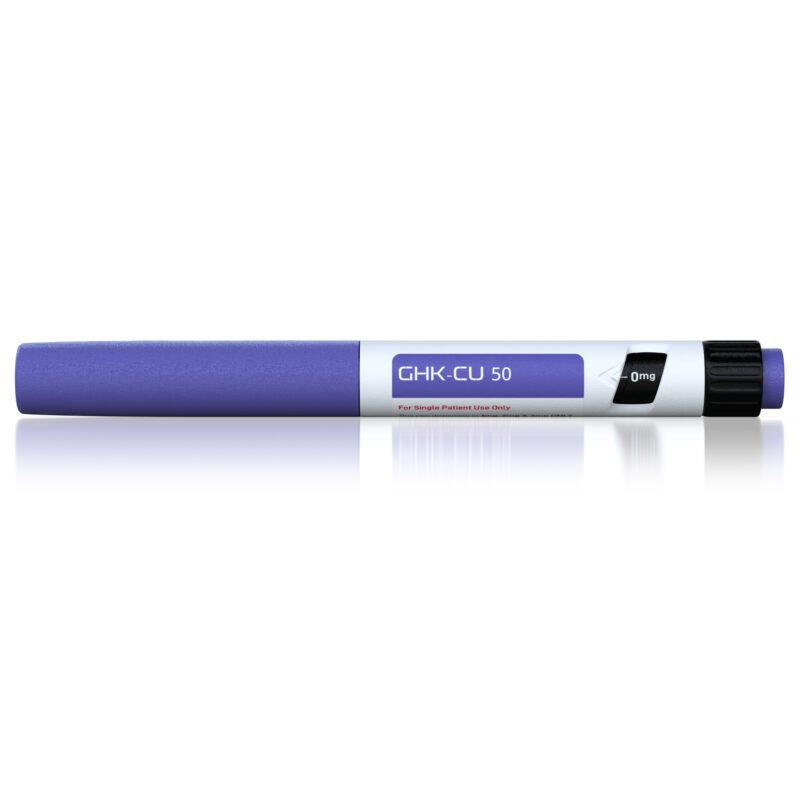
Skin, hair and tissue-remodelling research working with GHK-Cu, the copper-binding tripeptide.
- 1 × pre-filled multi-dose pen
- Full instructions
- Tamper-evident verification seal
- 8 × sterile needles
Body Pharm GHK-Cu
Official Body Pharm store — genuine product, batch-tested
GHK-Cu copper peptide for subcutaneous injection. Body Pharm premium research-grade purity.
- Lab-tested batch with full traceability
- Sealed pharmaceutical-grade packaging
- Discreet, insured shipping within Spain
Add 4 more pens and you get 10 % off. Any mix of pens counts.
Shipping to Spain only. If you are buying from another country, use the UK, German, Czech or EU edition — the links are at the end of this page.
Reviews of GHK-Cu
Verified reviews from Body Pharm research customers.
Absolutamente excelente para mi piel. Agradezco mucho la entrega rápida. La pluma de GHK-Cu le ha venido muy bien al aspecto de mi piel. Calidad de primera de Body Pharm.
Muy buen producto. He notado una diferencia real en la textura de mi piel. La pluma es fácil de usar. Mi única pega menor es el precio, pero por la calidad lo vale. Volveré a pedir sin duda.
Esta pluma ha cambiado por completo mi rutina de cuidado de la piel. Agradezco la entrega rápida y que sea una marca en la que puedo confiar. La calidad es constante. Gracias, Body Pharm.
Producto correcto para el precio. La pluma le ha venido bien al aspecto de mi piel. El envase me parece algo voluminoso, pero la pluma en sí es de calidad excelente. Lo recomendaría.
Cinco estrellas por mi parte. He probado varios productos de cuidado de la piel y esta pluma destaca por su pureza. Tengo la sensación de que ha reducido las líneas finas. Un producto sólido y fiable de Body Pharm.
Un producto normal. La pluma cumple su función, pero no estoy seguro de que valga el precio completo. Está bastante bien, pero seguramente esperaría a una oferta.
La prueba de verdad fue el efecto. No tuve reacciones en la piel, que suele ser un problema habitual. La pluma es sólida y fiable. La recomendaría.
Muy satisfecha con este pedido. La entrega llegó antes de lo que esperaba. La pluma es estupenda y funciona de forma eficaz. En conjunto, buena relación calidad-precio para la calidad que ofrece.
Al principio era algo escéptica, pero esta pluma ha resultado ser un complemento fantástico. Le ha venido bien a la recuperación de mi piel. Una inversión que merece la pena para quien quiera mejorar su piel.
Este es mi segundo pedido de esta pluma. La primera me duró alrededor de un mes con uso diario. Se ha convertido en parte fija de mi rutina. La única pega menor es que no trae compartimento para guardar las agujas.
Una pluma excelente que llevo usando ya unas semanas. He notado una mejora clara en la salud de mi piel. El ajuste de la dosis es perfecto. Muy recomendable.
On this page, research staff in Spain can buy GHK-Cu copper peptide in the form of a pre-filled multi-dose pen holding 50 mg of GHK-Cu in total in a 3 ml cartridge. The dose dial sets the dose directly in milligrams. Every pen is delivered together with a certificate of analysis that is specific to its batch and with the unambiguous labelling "for laboratory research only, not for human use" [4].
What separates a research-grade offering in 2026 from the offering of a cosmetic supplier is provenance that can be verified. Every pen that we ship is traceable back to a synthesis batch, an HPLC purity value and a confirmation by mass spectrometry. The guidance on storage (2–8 °C) follows the standard practice for peptides [4][6]. The tripeptide GHK (glycyl-L-histidyl-L-lysine) bound to copper(II) is one of the most frequently cited peptides in the dermatological literature. The 2018 review by Pickart and Margolina described the modulation of around 4000 human genes in cultured cells [1]. Below, we break down what "research grade" really means in supply practice and where the published evidence comes to an end.
What you will find here: the chemical identity and endogenous role of GHK-Cu; the current state of the mechanistic evidence and its limits; what "research grade" means in regulatory and quality terms; how Body Pharm's batch traceability works; and how to interpret dosing protocols that are derived from published animal studies.
GHK-Cu pen: the essentials
- GHK-Cu is a naturally occurring tripeptide–copper complex with documented functions in collagen synthesis and gene expression, but as of 2026 there is still no evidence from RCTs in humans
- Research-grade GHK-Cu should come with an HPLC purity of ≥ 98%, confirmation of identity by mass spectrometry and a bacterial endotoxin assay (LAL) expressed in EU/mg
- Body Pharm delivers every pen with full batch traceability, which includes the HPLC chromatogram, the identity file from mass spectrometry and the endotoxin result, all of which are available on request
- The dose dial sets the dose directly in milligrams; the reference range that is used in practice is 0.5 to 2 mg per day
- The published animal studies use subcutaneous dosing of 1–10 mg/kg; the topical work in humans is limited to formulations of 0.1–1% in cosmetic studies
- Tracked shipping within Spain for a flat shipping charge; unopened pens can be returned within 14 days, provided that the seal is intact
What is GHK-Cu? A plain-language summary
GHK-Cu is glycyl-L-histidyl-L-lysine bound to copper(II), a naturally occurring tripeptide–copper complex with a molecular mass of 340.38 g/mol. It was first isolated from human plasma by Loren Pickart in 1973 [1]. It circulates endogenously in plasma, saliva and urine, where it acts as a signalling molecule rather than as a structural protein fragment.
Pickart and Margolina (2018) report in their review that plasma concentrations of GHK fall from around 200 ng/ml at the age of 20 to around 80 ng/ml at the age of 60 [1]. That decline is often invoked as the justification for exogenous supplementation in research models. Independent replication of those plasma values after 2022 is scarce in the published literature. Treat the figures for the age-related decline as historical reference points rather than as current clinical benchmarks; no recent peer-reviewed study has confirmed them.
The research-grade injectable GHK-Cu that is sold here (a pre-filled pen) differs chemically, in terms of its intended purpose, from the "copper peptides" that are marketed in cosmetic serums. Topical formulations are dermal products for application to the skin. The pen format on this page is intended for in vitro and animal research workflows, including the subcutaneous injection studies that are dealt with in our GHK-Cu dosing protocol guide.
Research use only. Supplied for laboratory research. Not for use in people or in animals, not a medicine and not intended for cosmetic applications.
GHK-Cu research mechanisms: what the studies show
Four lines of work dominate the literature on GHK-Cu: the synthesis of the extracellular matrix (collagen, elastin, glycosaminoglycans), the broad modulation of gene expression, wound-healing signalling by way of the TGF-β and VEGF pathways, and the modulation of the metalloproteinases [1][2]. Almost all of the data in humans come from topical cosmetic trials; the subcutaneous route is supported by animal models. The full review, with the studies linked, is in what is GHK-Cu.
What does "research grade" actually mean?
Research-grade GHK-Cu is synthetic peptide that has been assayed to an HPLC purity of ≥ 98%. Its identity is confirmed by means of mass spectrometry. The endotoxin content is tested by LAL (Limulus amebocyte lysate, typically ≤ 1 EU/mg) and the material is delivered with a certificate of analysis for each batch. It sits between cosmetic grade (formulated for topical application, often at 1% in a serum base and with no endotoxin specification that is relevant to the parenteral route) and pharmaceutical grade (an authorised medicine manufactured under full GMP).
The practical difference is decisive for injection studies. A cosmetic GHK-Cu serum at 1% states a purity value on its CoA (certificate of analysis), but it states no endotoxin limit that is relevant to the parenteral route, because it was never intended for that route in the first place. A research-grade preparation, on the other hand, should state bacterial endotoxins in EU/mg. The Ph. Eur. (European Pharmacopoeia)/USP (United States Pharmacopeia) endotoxin limits for parenteral preparations apply to authorised sterile products, and not in any binding way to research reagents.
What a credible certificate of analysis contains
A research-grade CoA should set out:
- The batch number
- The date of synthesis
- The peptide content and the net peptide weight
- The HPLC purity as a percentage, together with the chromatogram
- Confirmation of identity (by MS or MS/MS)
- The bacterial endotoxin result in EU/mg by LAL
- Residual solvents, where this is applicable
- The appearance and the storage conditions
Many suppliers of research peptides publish the purity and the identity, but they leave out an explicit value for endotoxins in EU/mg. Endotoxin assays come at an additional cost, and that is precisely the most common gap in supplier documentation.
Laboratory standards explained in plain terms
Serious suppliers voluntarily align themselves with ICH Q7 (the International Council for Harmonisation guideline on GMP for active pharmaceutical ingredients) and with quality management systems to ISO 9001, using analytical methods that refer back to monographs of the European or United States Pharmacopoeia.
Body Pharm works with batch validation in accordance with the EU standard and with full traceability of every batch. Every pen can be traced back to a synthesis record, to an HPLC trace, to an MS identity file and to an LAL result, all of which you can request before you buy. The accompanying GHK-Cu dosing protocol describes how this material is used in subcutaneous study designs.
Body Pharm GHK-Cu: batch traceability and quality
Body Pharm GHK-Cu is filled, sealed and dose-validated to the EU laboratory standard. Every batch is delivered with full traceability documentation. A certificate of analysis for each batch is available on request (Body Pharm, 2026). The product is supplied as a sealed, pre-filled, pharmaceutical-grade multi-dose pen holding 50 mg of GHK-Cu in total in a 3 ml cartridge, and is labelled with the batch number, the total content and the date of synthesis. Each unit is traceable back to its production record.
Quality control follows practice that is aligned with ICH Q7 for active pharmaceutical ingredients (APIs), rather than quality control of the kind applied at a cosmetic level. The HPLC purity, the confirmation of identity by mass spectrometry and a bacterial endotoxin (LAL) result are all recorded for the specific batch that you receive.
Many suppliers of research peptides publish purity values but omit explicit endotoxin data from their public offering. Body Pharm provides the LAL value in EU/mg on the batch CoA. Anyone who is planning subcutaneous injection studies can check it against the thresholds in their own protocol before buying.
The status is "research use only", not for administration to people or to animals, in line with the labelling of unauthorised research reagents [5]. Anyone verifying provenance should request the CoA, quoting the batch number that is printed on the pen. The document that comes back should include the HPLC chromatogram, the MS identity file, the LAL result and the storage conditions. For the applied design of the study once the material is available, the GHK-Cu dosing protocol describes the steps of the subcutaneous dose calculation.
Methodology and quality box
- Synthesis and filling: to the EU laboratory standard, in sealed pre-filled pens, dose-validated unit by unit
- Identity: HPLC purity plus confirmation by MS, for each batch
- Endotoxins: the LAL result in EU/mg on the CoA for the batch
- Traceability: the batch number on the pen links back to the synthesis record, the analytical files and the shipping batch
- Access to the CoA: issued for each batch and available on request before dispatch
- Status: for research use only; not an authorised medicine
Delivery, packaging and returns in Spain
Orders are shipped to addresses within Spain with tracking, for a flat shipping charge. Most addresses receive their delivery within 3–5 working days of dispatch (Body Pharm, 2026). The tracking number is sent to you by email on the day of shipping, so that you can plan for receipt and have storage at 2–8 °C ready on arrival.
Shipping is discreet as a matter of course. Parcels are sent out in neutral, unbranded outer packaging, with no product names, references to peptides or laboratory identifiers on the label, a concern that research buyers in Spain regularly raise when they order to private addresses or to shared institutional ones.
Returns window
Unopened and unused pens can be returned within 14 days of delivery for a refund. The security seal must be intact and the storage conditions must have been observed. Pens that have been opened or started cannot be returned, for reasons of sterility and traceability; once the seal has been broken, the integrity of the product can no longer be demonstrated. If a batch fails your incoming check against the CoA, contact us before you open any further units. Once a pen has been put into use, it is no longer returnable.
GHK-Cu dosing protocols for research
The pen sets the dose directly in milligrams on the dose dial. The reference range that practitioners work with is 0.5 to 2 mg per day by the subcutaneous route, in cycles of 4–8 weeks; the animal studies use 1–10 mg/kg, a scale that does not carry over into practice [1]. The week-by-week schedule and the notes on cycles are in how to dose GHK-Cu.
GHK-Cu versus other skin and recovery peptides
GHK-Cu differs from the other recovery peptides above all in its copper-mediated synthesis of collagen and in its broad modulation of gene expression. BPC-157, TB-500 and NAD+ each act through unrelated pathways that are directed at different cellular systems. Anyone who is selecting a compound for a specific endpoint should match the mechanism to the model instead of treating these peptides as interchangeable.
| Compound | Main mechanism | Most studied application |
|---|---|---|
| GHK-Cu | Delivery of copper, collagen synthesis, modulation of ~4000 genes in vitro (Pickart and Margolina, 2018) [1] | Remodelling of the skin, topical cosmetic work [3] |
| BPC-157 | Cytoprotective pentadecapeptide, angiogenic signalling | Repair of the gut and of tendons (animal models) |
| TB-500 (thymosin β-4) | Sequestration of actin, angiogenesis | Repair of soft tissue and of blood vessels |
| NAD+ | Sirtuin cofactor pathways and mitochondrial pathways | Cellular energetics, research into longevity |
The mechanistic overlap with NAD+ is limited to broad effects on gene expression. GHK-Cu acts through copper-dependent signalling, whereas NAD+ is a mitochondrial cofactor. The two pathways are distinct from one another. For a more thorough comparison of the two most common reference compounds in recovery, read our BPC-157 vs TB-500 comparison. Come back to the GHK-Cu dosing protocol once you have chosen the compound that fits your endpoint.
Frequently Asked Questions
Can GHK-Cu be bought in Spain for research purposes?
Body Pharm supplies GHK-Cu in Spain exclusively under the labelling "for laboratory research only, not for human use". The tripeptide is not an authorised medicine and it is not marketed as one [5].
How should GHK-Cu be stored?
Store the pen at between 2 and 8 °C and keep it protected from light. While unopened, it keeps for 24 months. Once it has been punctured for the first time, use it within 12 months. If you do not have a refrigerator available, the pen will tolerate up to 30 days at room temperature, with a maximum of 30 °C. Let it come to room temperature before injecting and never freeze it. Swings in temperature degrade the structure of the peptide [4][6].
How is the dose set on the GHK-Cu pen?
On the dose dial, directly in milligrams. You set the dose that your protocol calls for and the pen delivers it; the reference range that is used in practice is 0.5 to 2 mg per day. The allocation of dose and frequency is in the GHK-Cu dosing protocol.
Can I return an opened pen?
No. Only unopened items in their original packaging can be returned within 14 days of delivery. Once the seal has been broken, the chain of custody and the sterility can no longer be verified.
Does Body Pharm ship abroad?
At present, Body Pharm ships only to addresses within Spain. International availability and the customs handling of research peptides vary from country to country and are not confirmed for 2026.
Next steps
Before you buy, request the certificate of analysis for the batch that you intend to use, quoting the batch number. Check the HPLC purity, the identity by MS and the endotoxin result in EU/mg against the thresholds of your protocol. When the material arrives, transfer it immediately into storage at 2–8 °C and consult the GHK-Cu dosing protocol for the dose and injection calculations tailored to your study design.
Sources
- Pickart L, Margolina A. Regenerative and Protective Actions of the GHK-Cu Peptide in the Light of the New Gene Data. Int J Mol Sci. 2018. pubmed.ncbi.nlm.nih.gov/29986520
- Pickart L. The human tri-peptide GHK and tissue remodeling. J Biomater Sci Polym Ed. 2008. pubmed.ncbi.nlm.nih.gov/18644225
- Pickart L, et al. GHK Peptide as a Natural Modulator of Multiple Cellular Pathways in Skin Regeneration. Biomed Res Int. 2015. pubmed.ncbi.nlm.nih.gov/26236730
- Body Pharm product specification: pre-filled multi-dose pen, 3 ml cartridge, dial in milligrams, storage at 2–8 °C, 24 months unopened and 12 months from the first puncture, up to 30 days below 30 °C without refrigeration. Supplier specification, not a study.
- Directive 2001/83/EC, Article 1: definition of a medicinal product by presentation and by function; consolidated text on EUR-Lex. eur-lex.europa.eu — the legal basis on which a reagent labelled "research use only" remains subject to pharmaceutical regulation if it is presented for human use.
- ICH, quality guidelines Q1A(R2) (stability) and Q7 (good manufacturing practice for active substances). ich.org
Buying from the UK? See the GHK-Cu pen on the UK store, which ships within the UK.
Buying from Germany? See the GHK-Cu pen on the German store, which ships within Germany and Austria.
Buying from Czechia? See the GHK-Cu pen on the Czech store, which ships within Czechia.
Buying from another EU country? See the GHK-Cu pen on the European store, which ships across the EU.


